
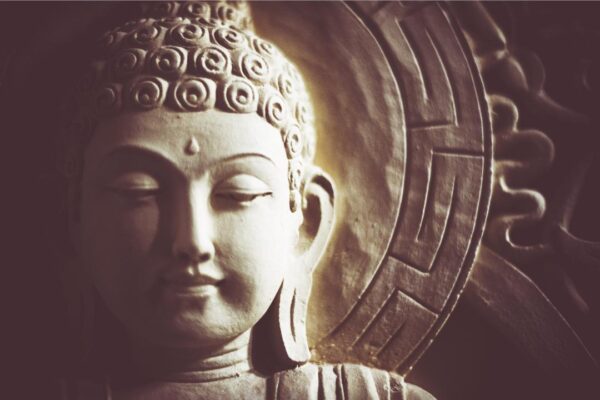
Within the Tibetan Buddhist calendar, Saga Dawa stands as one of the most sacred and consequential periods of the year. Observed during the fourth lunar month of the Kalachakra calendar, this month—and especially its central full-moon day—marks a convergence of the Buddha’s most profound life events. For practitioners connected with Khenpo Choga Rinpoche and the Dzogchen Shri Singha Foundation, Saga Dawa Duchen is not merely commemorative. It is a living opportunity to align body, speech, and mind with the Dharma in a focused and meaningful way.
Why Saga Dawa Duchen Matters
Saga Dawa Duchen commemorates several pivotal moments in the Buddha’s life. According to the tradition, the fourth lunar month includes the Buddha’s birth on the seventh day, and on the fifteenth day his subjugation of the maras, his complete awakening, and his parinirvana. Because these events coincide within a single lunar month, the period is considered exceptionally powerful. Actions—virtuous or harmful—are said to multiply many times over. For this reason, practitioners treat Saga Dawa Duchen as a month of heightened ethical responsibility and conscious intention.
This understanding is not meant to inspire fear or superstition, but care and attentiveness. When conditions are powerful, even small shifts in conduct can have lasting effects.
Ethical Restraint as Practice
Traditionally, many practitioners—human and non-human alike—use Saga Dawa Duchen to temporarily abandon negative intentions and actions. Those who habitually harm may take a vow not to kill; those inclined toward stealing may refrain entirely; those prone to sexual misconduct may consciously pause. For lay practitioners, this often translates into practical commitments: refraining from harsh speech or curse words, avoiding mind-altering substances, and exercising restraint in daily interactions.
These vows are not moral performances. They are short-term, sincere experiments in freedom—opportunities to experience what the mind and body feel like when gross disturbances are reduced.
Skillful Virtue in Action
Acts of generosity and compassion are especially encouraged during Saga Dawa Duchen. Practices such as releasing animals destined for slaughter—often called “life release”—can be very beneficial when done carefully. However, practitioners are cautioned to act wisely. In some places, animals are raised specifically to be sold for release and may not survive in the wild. Compassion must be paired with discernment.
Another powerful approach is to join the virtuous activities of others: supporting Dharma projects, assisting fellow practitioners, or participating in communal practice. Merit grows not only from what we do alone, but from what we uphold together.
Antidoting Personal Tendencies
Saga Dawa Duchen is also an ideal time for targeted inner work. Rather than vague resolutions, practitioners are encouraged to address specific habitual patterns. If one is overly serious, cultivate lightness for a month. If restless, commit to fifteen minutes of daily sitting meditation. If prone to laziness, practice diligence wholeheartedly for the entire period.
This kind of self-knowledge-based practice reflects an essential principle of the Dharma: liberation arises not from imitation, but from honest engagement with one’s own mind.
Study, Dharma, and the Buddha Path
Reading authentic Buddhist texts—especially those one can truly understand—is strongly encouraged during Saga Dawa Duchen. For students of Khenpo Choga Rinpoche, particular emphasis is placed on How to Knowingly Practice the Four Enlightened Truths. Teaching or studying the Four Enlightened Truths is said to accumulate immeasurable merit, purify negative karma, and ripen body, speech, and mind toward awakened omniscience.
The Buddha Path is not a fragment or a philosophy among others. It is the totality of the Buddha’s teachings, honored as the living Buddha, Dharma, and Sangha. It is Teacher itself—unequaled in this world.
Confidence Rooted in Awakening
The Buddha is described as having complete power over Dharma because all ignorance—of self and of phenomena—has been eliminated. This mastery allows the Buddha to teach fearlessly and clearly. Ordinary beings, by contrast, lack confidence because they do not fully know or embody the Dharma. For this reason, practitioners traditionally pray to Manjushri, Avalokiteshvara, or the Buddhas before teaching, relying on awakened wisdom and compassion rather than ego.
In this way, to the extent that fear and ignorance dissolve, authentic teaching becomes possible.
A Living Month, A Living Transmission
Saga Dawa Duchen is not about perfection. It is about participation—entering a living transmission with sincerity and care. Through ethical restraint, study, compassion, and self-awareness, this sacred month becomes a bridge between timeless awakening and everyday life.
Within the Dzogchen Shri Singha Foundation, Saga Dawa Duchen is honored as a shared field of practice, continuity, and trust—one that reflects the living lineage upheld by Khenpo Choga Rinpoche, and invites all sincere practitioners to step more fully onto the Buddha Path.